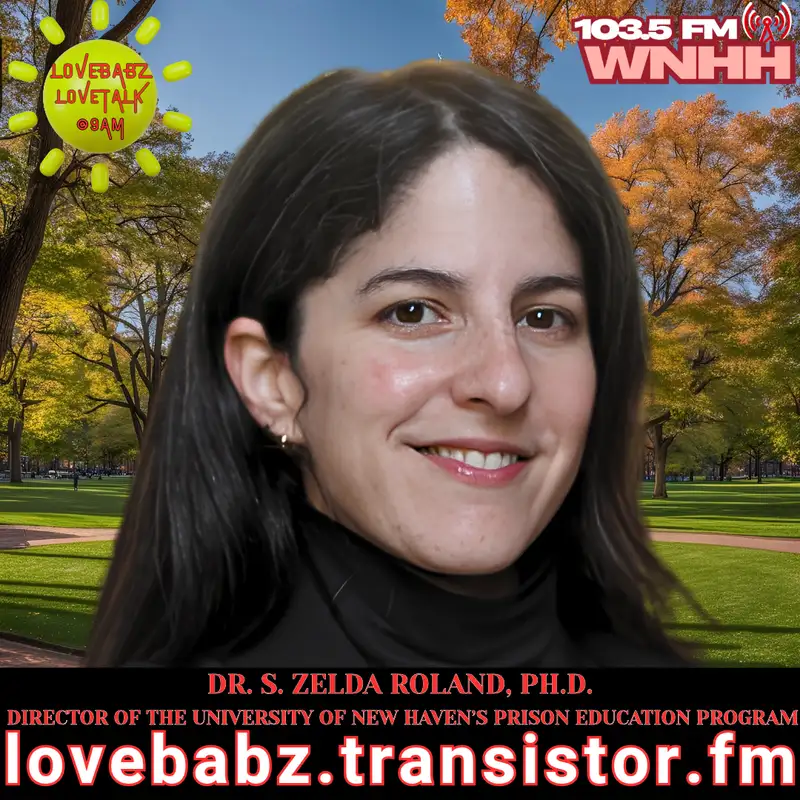
Dr. S. Zelda Roland, Ph.D.
Download MP3LoveBabz LoveTalk with Babz Rawls-Ivy: Dr. S. Zelda Roland, Ph.D.
Transcript
Overview
Babz interviewed Zelda and Bryan “Luv” Jordan about the Yale Prison Education Initiative and its education and reentry work.
Program Model
- The Yale and University of New Haven partnership offers credit-bearing courses at three prisons, leading to associate or bachelor’s degrees. It has graduated more than 40 students and provides academic support and digital literacy.
- Admissions do not consider sentence length or conviction type. The program is funded through donations and private grants, rather than student payments.
- Luv, a program alumnus now studying criminal justice at the University of New Haven, described the program as transformative and highlighted the challenges of reentry.
Growth And Reentry
- The team is exploring expansion to more prisons, continued learning after graduation, facility-wide programming, and additional reentry support, including housing, financial wellness, and mental health resources.
- How can the program secure the funding and prison access needed to expand? What supports can sustain alumni after release and after earning degrees?
Action Items
- Return to the show in the spring to discuss the upcoming graduation, alumni outcomes, and the program's reentry work.
Outline
College-In-Prison Program
- Zelda described the partnership’s degree pathways, classes, academic supports, and more than 40 graduates.
- The program operates at McDougall-Walker and two federal women’s prisons in Danbury; it is the only college degree program available to women in any U.S. federal prison.
- Admissions exclude consideration of sentence length and conviction type. Funding comes from individual donations and private grants.
Student And Faculty Experience
- Faculty teach campus-level courses inside prisons and report that the experience strengthens their teaching.
- Luv said the program changed his life and helped him continue his education after release. He now works as a reentry navigator.
Future Priorities
- The program hopes to expand in state and federal prisons and develop post-degree and facility-wide learning opportunities.
- The team is considering a transitional house in New Haven and increased mental health and financial wellness support for alumni.